
Critical Illness Insurance vs Health Insurance: What's the Difference?
Insurance Writer
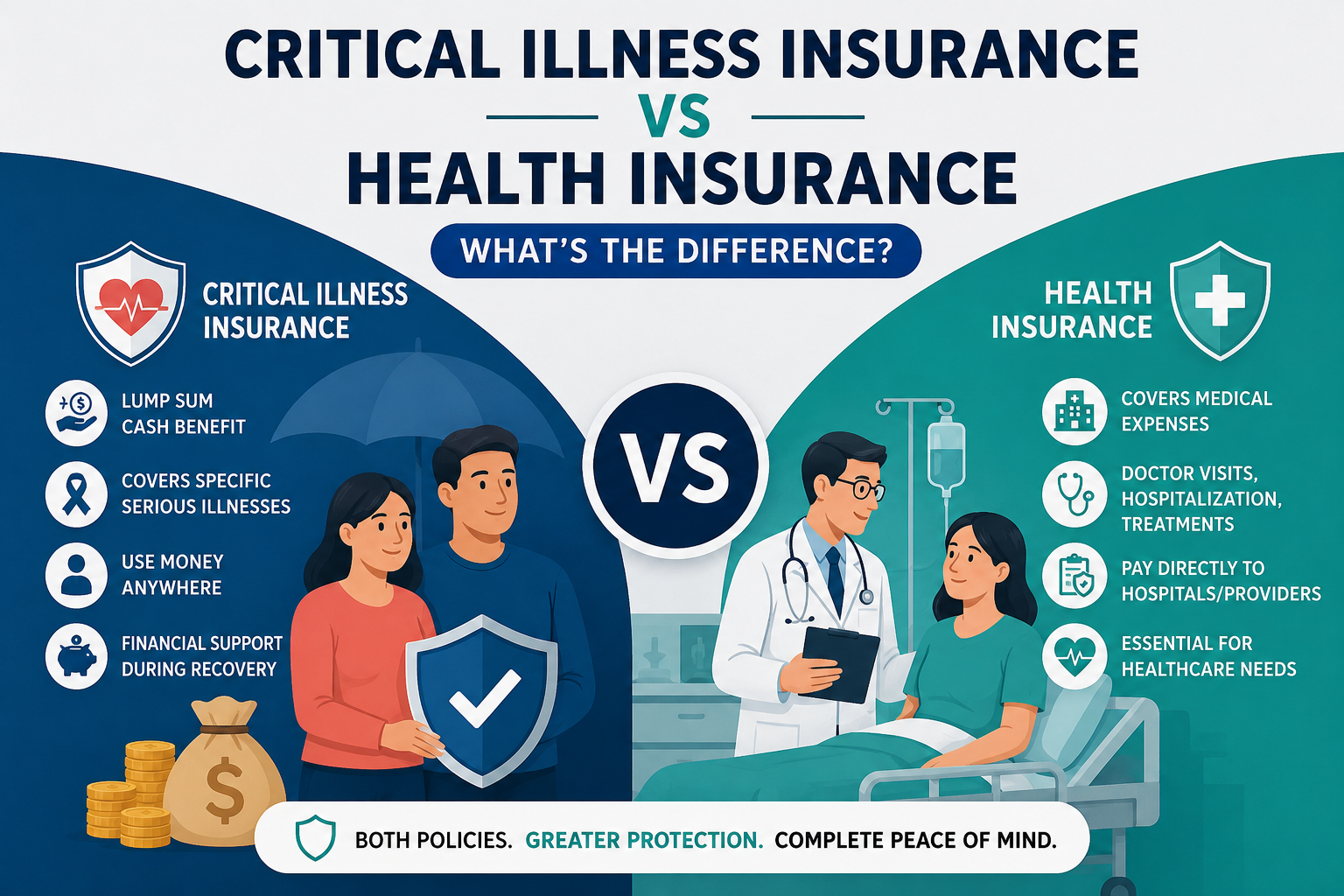
Critical Illness Insurance vs Health Insurance: What's the Difference? (2026 Guide)
When it comes to protecting yourself from medical emergencies, two common types of coverage often cause confusion: health insurance and critical illness insurance. Many people assume they provide the same protection, but they actually serve very different purposes.
Health insurance helps cover eligible medical expenses such as hospital stays, surgeries, doctor visits, and treatments. Critical illness insurance, on the other hand, provides a lump-sum cash payment if you're diagnosed with a covered serious illness such as cancer, heart attack, or stroke.
Understanding the differences between these policies can help you build a stronger financial safety net and avoid costly surprises during a medical crisis.
In this guide, we'll compare critical illness insurance vs health insurance, explain how each works, discuss their advantages and limitations, and help you determine whether you need one or both.
What Is Health Insurance?
Health insurance is a type of coverage that helps pay for eligible healthcare expenses. Depending on your policy, it may cover doctor visits, emergency room treatment, hospitalization, surgeries, prescription medications, preventive care, specialist consultations, and diagnostic tests.
Health insurance is designed to reduce the financial burden of medical treatment by sharing costs between you and your insurer.
Most health insurance policies include:
- Hospitalization coverage
- Emergency medical care
- Preventive services
- Prescription drug coverage
- Specialist consultations
- Laboratory tests and diagnostics
- Surgical procedures
However, health insurance usually doesn't replace lost income or cover non-medical expenses that may arise after a serious illness diagnosis.
What Is Critical Illness Insurance?
Critical illness insurance is a supplemental insurance policy that pays a lump-sum cash benefit when the insured person is diagnosed with a covered serious illness.
Unlike health insurance, critical illness insurance doesn't reimburse medical bills. Instead, it provides a cash payout that can be used however you choose.
The payout can help cover:
- Mortgage payments
- Household bills
- Lost income
- Travel expenses for treatment
- Caregiver costs
- Experimental treatments
- Medical expenses not covered by health insurance
Common illnesses covered may include:
- Heart attack
- Cancer
- Stroke
- Kidney failure
- Major organ transplant
- Coronary artery bypass surgery
- Multiple sclerosis
- Advanced Alzheimer's disease
Coverage varies by insurer, so policy terms should always be reviewed carefully.
Critical Illness Insurance vs Health Insurance: Quick Comparison
| Feature | Health Insurance | Critical Illness Insurance |
|---|---|---|
| Primary Purpose | Covers medical treatment expenses | Provides cash after diagnosis of covered illness |
| Payout Method | Reimbursement or direct payment to providers | Lump-sum cash benefit |
| Coverage Scope | Broad healthcare expenses | Specific covered illnesses |
| Hospitalization Coverage | Yes | No |
| Doctor Visits | Usually covered | No |
| Income Replacement | No | Yes |
| Use of Benefits | Restricted to healthcare costs | Any purpose |
| Premium Cost | Generally higher | Usually lower |
| Routine Care Coverage | Yes | No |
| Best For | Everyday medical protection | Financial support during major illness |
How Health Insurance Works
When you receive covered medical treatment, your health insurance policy helps pay eligible expenses according to your plan's rules.
For example, if you require surgery costing $40,000, your health insurer may cover a large portion of the bill after deductibles, copayments, and coinsurance requirements are met.
The insurer typically pays healthcare providers directly or reimburses approved medical expenses.
This makes health insurance essential because even a single hospitalization can create substantial financial strain.
How Critical Illness Insurance Works
Critical illness insurance activates when a covered illness is diagnosed and meets the policy's definition.
For example, if you're diagnosed with a covered cancer and have a $50,000 critical illness policy, the insurer may pay the full $50,000 benefit once the claim is approved.
You can then use that money however you choose.
Some common uses include:
- Replacing lost income during recovery
- Paying rent or mortgage obligations
- Managing household expenses
- Funding rehabilitation services
- Seeking specialized treatment options
- Covering transportation costs
This flexibility is one of the biggest advantages of critical illness coverage.
Key Differences Between Critical Illness Insurance and Health Insurance
1. Coverage Focus
Health insurance focuses on healthcare expenses. Critical illness insurance focuses on providing financial support after a serious diagnosis.
2. Type of Benefit
Health insurance generally pays healthcare providers or reimburses covered expenses. Critical illness insurance pays cash directly to the policyholder.
3. Covered Conditions
Health insurance covers a broad range of medical needs. Critical illness insurance covers only specific illnesses listed in the policy.
4. Financial Flexibility
Health insurance funds are generally limited to medical expenses. Critical illness benefits can be used for virtually any purpose.
5. Income Protection
Health insurance doesn't replace income if you're unable to work. Critical illness coverage can help bridge that gap.
Can You Have Both Policies?
Yes.
In fact, many financial planners consider health insurance and critical illness insurance complementary rather than competing products.
Health insurance can help pay medical expenses, while critical illness insurance can help cover the financial impact of a serious diagnosis.
Having both policies may provide broader protection against healthcare costs and income disruption.
Who Should Consider Health Insurance Only?
Health insurance should be the foundation of every financial protection plan.
You may prioritize health insurance if:
- You have a limited budget
- You're young and healthy
- You don't have significant financial obligations
- You need basic medical protection first
- You lack any healthcare coverage
For most people, health insurance is the first policy to purchase.
Who Should Consider Both Health Insurance and Critical Illness Insurance?
You may benefit from both types of coverage if:
- You support a family
- You have a mortgage
- You are self-employed
- You have dependents
- You have significant monthly expenses
- You have a family history of serious illnesses
- You want additional financial security
The combination can provide stronger protection against both medical and financial risks.
Advantages of Health Insurance
- Covers routine healthcare needs
- Protects against major hospital bills
- Provides preventive care benefits
- Offers broad medical coverage
- Helps manage long-term healthcare costs
Disadvantages of Health Insurance
- Deductibles and copays may apply
- Doesn't replace lost income
- Some treatments may not be fully covered
- Out-of-pocket costs can still be significant
Advantages of Critical Illness Insurance
- Lump-sum cash benefit
- Flexible use of funds
- Can supplement health insurance
- Helps protect savings
- Provides financial stability during recovery
Disadvantages of Critical Illness Insurance
- Limited to covered illnesses
- Coverage definitions vary by insurer
- May include waiting periods
- Not a replacement for health insurance
Which Is Better: Critical Illness Insurance or Health Insurance?
There is no universal winner.
If your goal is protection from medical expenses, health insurance is generally the more essential coverage.
If your goal is protecting your income and finances after a serious diagnosis, critical illness insurance can add valuable support.
For many households, the ideal solution is maintaining health insurance while considering critical illness coverage as a supplement.
Real-Life Example
Imagine Sarah is diagnosed with cancer.
Her health insurance helps cover hospitalization, chemotherapy, specialist visits, and approved treatment costs.
However, Sarah also needs time away from work, resulting in reduced income. She incurs travel costs for treatment and requires additional home assistance.
If Sarah has critical illness insurance, she may receive a lump-sum benefit that can help pay these expenses without dipping into savings.
This example highlights why many people choose both forms of protection.
Frequently Asked Questions
Is critical illness insurance worth it?
It may be worth considering if you want financial protection against the income and lifestyle impact of a serious illness.
Can I have both health insurance and critical illness insurance?
Yes. Many people use critical illness insurance to supplement their health insurance coverage.
Does health insurance cover cancer treatment?
Many health insurance plans cover cancer treatment, subject to policy terms, deductibles, copays, and coverage limitations.
Does critical illness insurance cover all illnesses?
No. It only covers conditions specifically listed in the policy.
Can I use a critical illness payout for non-medical expenses?
Yes. Benefits can generally be used for any purpose, including household bills and mortgage payments.
Which policy is cheaper?
Critical illness insurance premiums are often lower because coverage is limited to specific illnesses, while health insurance offers broader protection.
Can critical illness insurance replace health insurance?
No. Critical illness insurance is generally designed to supplement, not replace, comprehensive health insurance coverage.
Final Thoughts
Health insurance and critical illness insurance play different but important roles in financial protection.
Health insurance helps manage the cost of medical care, while critical illness insurance provides a cash safety net when life-changing illnesses occur.
For most people, health insurance should be the first priority. Once that foundation is in place, critical illness insurance may offer additional financial security and peace of mind.
Before purchasing any policy, compare coverage options, exclusions, waiting periods, and benefit amounts to determine what best fits your healthcare and financial needs.