
Term vs Whole Life Insurance: Which One Should You Actually Buy?
Insurance Writer
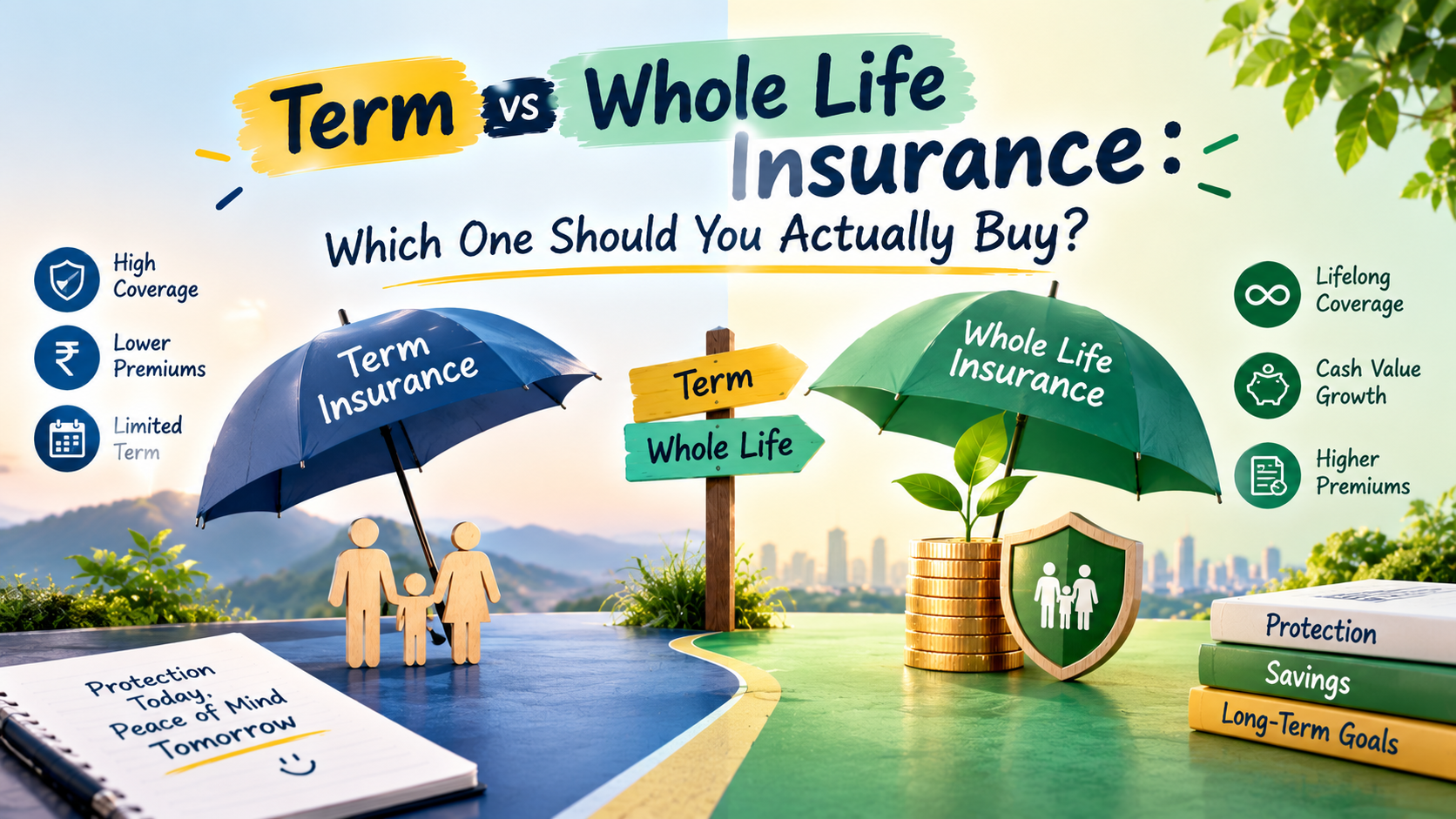
The Short Answer
For most people with a family, a mortgage, or anyone depending on their income, term life insurance is the better fit. It's simple, it's affordable, and it covers you for the years you actually need protection. Whole life makes sense in narrower situations — lifelong dependents, estate planning, or a specific need for coverage that never expires. If you want the full breakdown of how each policy works, we cover it step by step in our Term vs Whole vs Universal Life lesson. This post is the practical version: what actually changes your decision, and where people get it wrong.
The Core Difference in One Sentence
Term life covers you for a set number of years and pays out only if you die during that window. Whole life covers you for your entire life and costs far more, because part of every premium builds a cash value account alongside the death benefit.
What Each One Actually Costs
| Policy Type (healthy 35-year-old, $500,000) | Approximate Monthly Cost |
|---|---|
| 20-year term | Roughly $25–$40 |
| Whole life | Roughly $350–$550 |
That's not a typo. Whole life often runs about ten times the cost of term for the exact same death benefit. The gap exists because whole life is doing two jobs at once — insuring you and building savings — and you pay for both, whether you need the savings piece or not.
Why People Get Sold on Whole Life Anyway
If whole life is so much pricier, why does it still get sold so heavily? A few reasons, and it's worth naming them so you can see past the pitch:
- "Coverage that never expires" sounds safer. It's an easy line to sell, even when a 30-year term would outlast the actual need.
- Agents often earn higher commissions on permanent policies. That doesn't make the product wrong for everyone, but it does mean the incentive to recommend it isn't always about your situation.
- Cash value feels like "not wasting money." Paying for term and getting nothing back if you outlive it can feel inefficient, even though that's exactly how insurance is supposed to work — you're paying to transfer risk, not to save.
None of this means whole life is a bad product. It means it's worth buying on purpose, not because it was the first thing offered to you.
Life-Stage Scenarios: Which Fits Where
| Your Situation | What Usually Fits | Why |
|---|---|---|
| Young family, mortgage, kids under 10 | 20–30 year term | Covers the exact years your family is most financially exposed |
| Single, no dependents | Little to none, or a small term policy | Nobody is relying on your income yet |
| Nearing retirement, kids grown, mortgage paid off | Often none, or a small final-expense policy | The original need for large coverage has mostly disappeared |
| Lifelong dependent (special needs child, etc.) | Whole life or guaranteed universal life | The need for coverage genuinely has no end date |
| High net worth, estate planning | Whole life, often alongside a trust | Used deliberately for wealth transfer and estate liquidity, not income replacement |
The Cash Value Reality Check
Whole life's cash value is the feature most people are sold on, so it's worth understanding what it actually does in the early years. A meaningful chunk of your premium in the first several years goes toward the insurer's costs and commissions, not your cash value. It's common for the cash value to be worth less than what you've paid in premiums for a decade or more before it catches up.
If you surrender the policy early — meaning you cancel it and take the cash value instead of keeping the coverage — you'll often face a surrender charge on top of that slow start, meaning you could get back significantly less than you put in. This is the trap that catches people who bought whole life without a clear, long-term reason: they end up cancelling a few years in, at exactly the point where it costs them the most to do so.
The Math Most People Skip
Say you're 35 and choosing between a 20-year term policy at $30/month and whole life at $450/month for the same $500,000. Over 20 years, that's a $420/month difference — $100,800 total. If you invested that difference instead, at a conservative 5–7% average annual return, it could grow to roughly $173,000–$219,000, well beyond the $500,000 death benefit either way, and money you'd actually have access to while you're alive. That's not a guarantee — markets fluctuate and this assumes discipline — but it's the comparison worth running before assuming permanent coverage is the "safer" choice.
Common Myths, Corrected
| Myth | Reality |
|---|---|
| "Term insurance is wasted money if you don't die." | That's the point of insurance — you're paying to remove a risk, the same way you don't expect a refund from car insurance for not crashing |
| "Whole life is always a better long-term investment." | Its guaranteed growth is modest, and the early years are weighed down by fees; it's insurance first, savings second |
| "You need permanent coverage to protect your family for life." | Most families' financial dependency has a natural end point — once kids are grown and the mortgage is gone, the need for a large payout usually shrinks with it |
| "Term insurance is only for young, healthy people." | You can buy term at almost any age; it just costs more the older or less healthy you are, same as whole life |
A Middle Ground Exists
If you like the idea of lifelong coverage but the whole life price tag doesn't work, look at guaranteed universal life. It's priced closer to term for the same lifetime guarantee, without the same size cash value component. Another option is a convertible term policy, which lets you switch some or all of your term coverage to permanent later without new medical underwriting — useful if your health or needs might change. We go deeper on all of these, including indexed and variable universal life, in the full lesson on the site.
A Quick Decision Checklist
- Does my need for coverage have a natural end point (mortgage paid off, kids independent)? → Term likely fits
- Do I have a dependent who will need support for life? → Permanent coverage is worth a serious look
- Am I buying life insurance mainly because a policy was pitched to me, rather than a need I identified myself? → Slow down and compare against a simple term quote first
- Could I get the same protection for a fraction of the cost, and invest the difference myself? → Worth running the numbers before committing to permanent coverage
Frequently Asked Questions
Is term or whole life insurance better?
For temporary needs like income replacement or debt protection, term is usually more efficient. Whole life fits narrower, permanent needs like lifelong dependents or estate planning.
Why is whole life so much more expensive than term?
Whole life bundles lifelong coverage with a guaranteed-growth cash value account, so you're paying for two things at once instead of just insurance for a set period.
What happens if I cancel a whole life policy early?
You'll typically get back the cash value minus any surrender charges, which in the early years can mean receiving significantly less than the total premiums you paid in.
Can I switch from term to whole life later?
Many term policies include a conversion option that lets you switch to permanent coverage without a new medical exam, usually within a set window — worth checking when you buy.
Want the full picture — how premiums are priced, what underwriting involves, and how to compare quotes properly? Start with our Life Insurance in the US guide.