
Term Insurance vs Life Insurance: What's the Real Difference?
Finzony Team
Finzony Desk
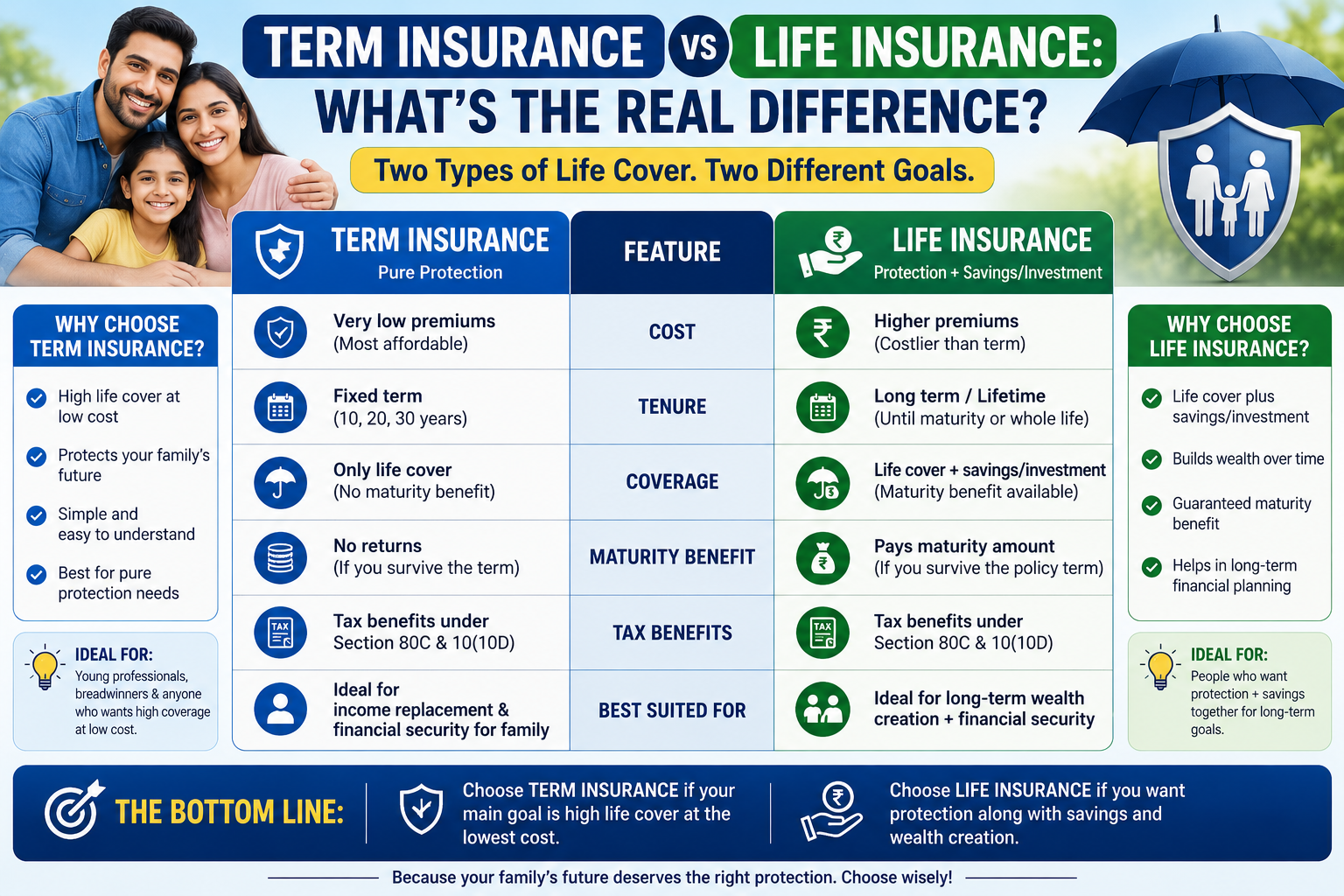
Life Insurance is the Category. Term Insurance is One Type.
This is the single most common confusion buyers have. "Life insurance" refers to any policy that pays out on the death of the insured — it's an umbrella term covering term plans, whole life plans, endowment plans, and ULIPs (Unit Linked Insurance Plans). Term insurance is the purest, simplest form of life insurance: pure protection, no savings or investment component attached.
When people ask "term vs life insurance," they usually mean term insurance vs the savings-linked life insurance products — endowment and ULIP plans. That's the comparison that actually matters for most buyers.
How Term Insurance Works
You pay a fixed premium for a chosen term — say 30 years — and if you pass away during that period, your nominee receives the full sum assured. If you outlive the term, most plans pay nothing back (unless you specifically buy a "return of premium" variant, which costs significantly more).
Because there's no investment component, the premiums are dramatically lower than other life insurance products for the same coverage amount. A healthy 30-year-old can often get ₹1 crore of coverage for a premium that's a fraction of what an equivalent endowment plan would cost.
How Endowment and ULIP Plans Work
These combine insurance with an investment or savings component. Part of your premium covers the life insurance risk, and part is invested — in guaranteed-return instruments for endowment plans, or in market-linked funds for ULIPs. At maturity, if you're still alive, you receive a payout.
The catch: because a portion of every premium goes toward "savings" rather than pure protection, the actual death benefit (sum assured) you can afford is much lower than what you'd get from a term plan at the same premium.
Cost Comparison: Why the Gap is So Large
This is where the difference becomes concrete. For the same monthly premium:
- A term plan might get you ₹1 crore of pure life cover.
- An endowment or ULIP plan at the same premium might only get you ₹10–15 lakh of life cover, with the rest going into the investment component.
If your primary goal is making sure your family is financially secure if something happens to you, that ten-fold difference in coverage matters enormously.
Which One Should You Buy?
Most financial advisors recommend separating insurance and investment rather than combining them: buy a large term cover for pure protection, and invest the money you save (compared to an endowment/ULIP premium) separately in mutual funds, PPF, or other instruments where you have more control and typically better returns. This "buy term, invest the rest" approach usually results in both better protection and better wealth accumulation.
ULIPs and endowment plans can still make sense for someone who wants forced disciplined savings with insurance built in, or who values the tax-free maturity payout structure — but they're rarely the most efficient way to either insure or invest.
How Much Term Cover Do You Need?
A common rule of thumb is 10–15 times your annual income, adjusted for outstanding loans (like a home loan) and future obligations such as children's education. Someone earning ₹12 lakh a year with a home loan might reasonably need ₹1.5–2 crore of term cover.
Bottom Line
Term insurance and life insurance aren't really competing products — term insurance is life insurance, just without the investment layer. For most families, the smarter move is a large, affordable term cover for protection, kept completely separate from your investment strategy.