
Federal vs Private Student Loans, Interest Accrual, and the Fine Print Most Borrowers Miss
Debt Writer
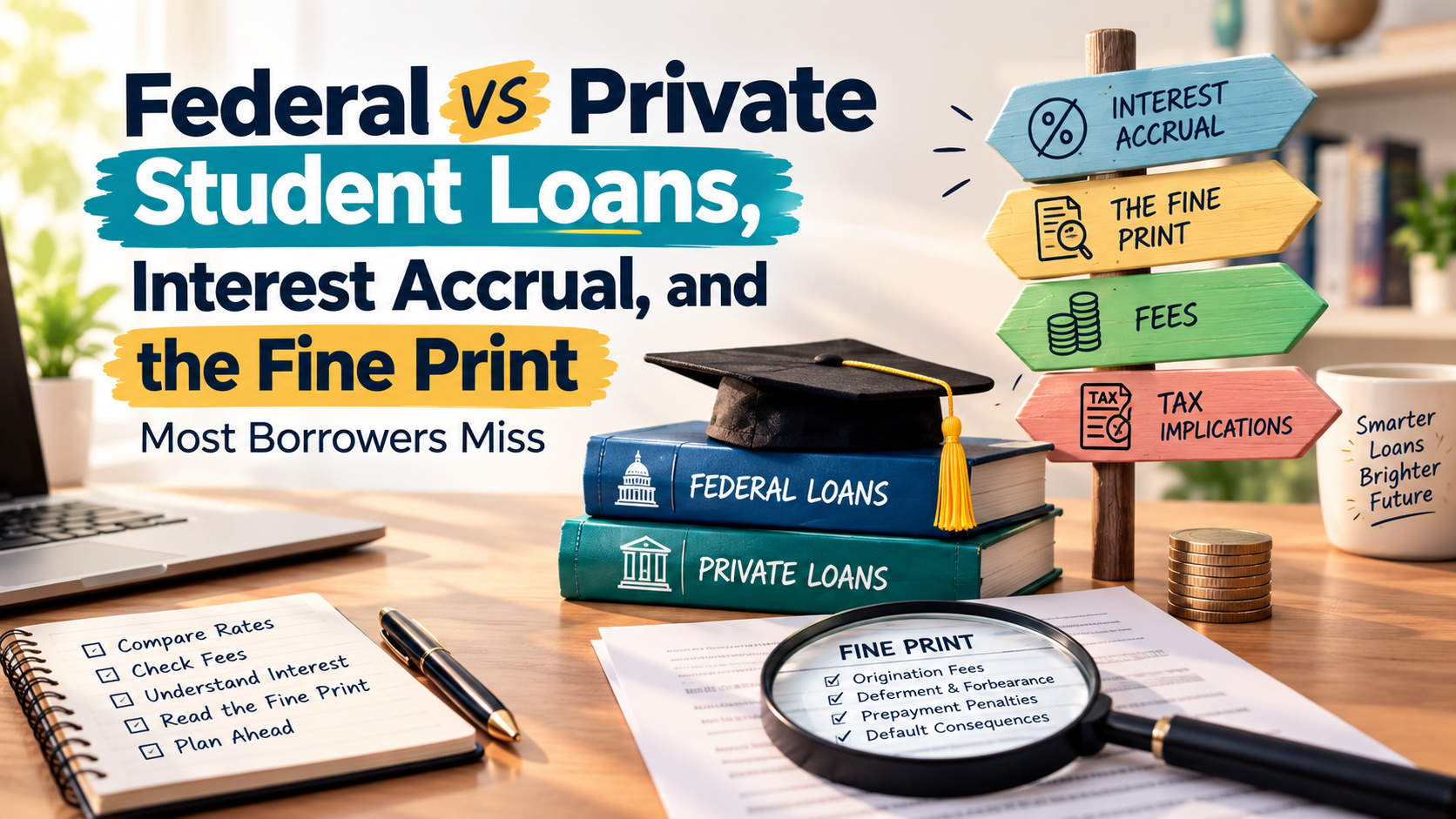
Quick answer: Not all student loans work the same way — federal and private loans have genuinely different rules, and understanding exactly how interest accrues and what's actually in your loan terms can save thousands over the life of the loan.
Student Loan Debt 101: Federal vs Private, Interest Accrual, and the Fine Print That Matters
Most people take on student loan debt before they've ever had to manage a loan of this size — and the terminology alone (capitalization, grace periods, subsidized vs unsubsidized) can be confusing enough that basic decisions get made without fully understanding them. This post covers the foundational differences that shape everything else about repaying student loans.
Federal vs Private Student Loans: Not the Same Product
This is the single most important distinction in student loan debt, because it determines which protections and repayment options are even available to you later.
| Feature | Federal Loans | Private Loans |
|---|---|---|
| Lender | U.S. Department of Education | Banks, credit unions, or other private lenders |
| Interest rates | Fixed, set by federal law each year | Fixed or variable, based on creditworthiness |
| Repayment plan flexibility | Multiple plans, including income-driven options | Generally limited to what the specific lender offers |
| Forgiveness eligibility | Eligible for federal forgiveness programs | Not eligible for federal forgiveness programs |
The practical takeaway: federal loans generally come with more borrower protections and flexibility, which is why they're typically recommended to be exhausted before turning to private loans for any remaining need. The full comparison, including how to identify which type your existing loans are, is here: Federal vs Private Student Loans.
How Interest Actually Accrues
Interest on student loans typically accrues daily, based on your outstanding principal balance — and understanding this daily accrual is what explains why even small differences in when you make a payment can matter. A subsidized federal loan doesn't accrue interest while you're in school (the government covers it); an unsubsidized loan accrues interest from disbursement, whether or not you're making payments yet. The full mechanics, with a worked daily-accrual example, are covered here: How Student Loan Interest Actually Accrues.
Capitalization: The Detail That Quietly Grows Your Balance
Capitalization is when accrued but unpaid interest gets added to your principal balance — meaning future interest is then calculated on that larger amount. This commonly happens at the end of a grace period, when switching repayment plans, or coming out of deferment/forbearance. It's one of the most overlooked ways a student loan balance can grow larger than the amount originally borrowed, even without missing any payments.
Common mistake: Assuming a "grace period" means nothing is happening with the loan. On unsubsidized loans, interest often continues accruing during the grace period — and if unpaid, it can capitalize once repayment begins, increasing the principal you owe going forward.
A full breakdown of grace periods, capitalization triggers, and what to actually look for in your loan terms is here: Reading Your Loan Terms: Capitalization, Grace Periods & More.
Key Terms
- Capitalization: When unpaid accrued interest is added to the principal balance, so future interest is calculated on a larger amount.
- Subsidized loan: A federal loan where the government covers interest while the borrower is in school; interest doesn't accrue during that period.
- Grace period: A set window after leaving school before regular repayment is required to begin — interest may still accrue during this time on unsubsidized loans.
Frequently Asked Questions
Should I always choose federal loans over private ones?
Federal loans generally offer more repayment flexibility and forgiveness eligibility, so most guidance is to exhaust federal loan options first before turning to private loans for any remaining need.
Does interest accrue while I'm still in school?
Depends on the loan type — subsidized federal loans don't accrue interest while you're in school, but unsubsidized loans (federal or private) generally do, from the time the loan is disbursed.
Can I avoid capitalization?
Paying accrued interest before it capitalizes (such as during a grace period or before switching plans) can prevent it from being added to your principal balance, though this depends on your specific financial ability to do so.
Are private student loan interest rates always higher than federal ones?
Not necessarily for every borrower — private rates depend on creditworthiness and can sometimes be competitive, but they lack the fixed, legally-set structure and borrower protections that federal loans carry.