
What Is Motor Insurance?
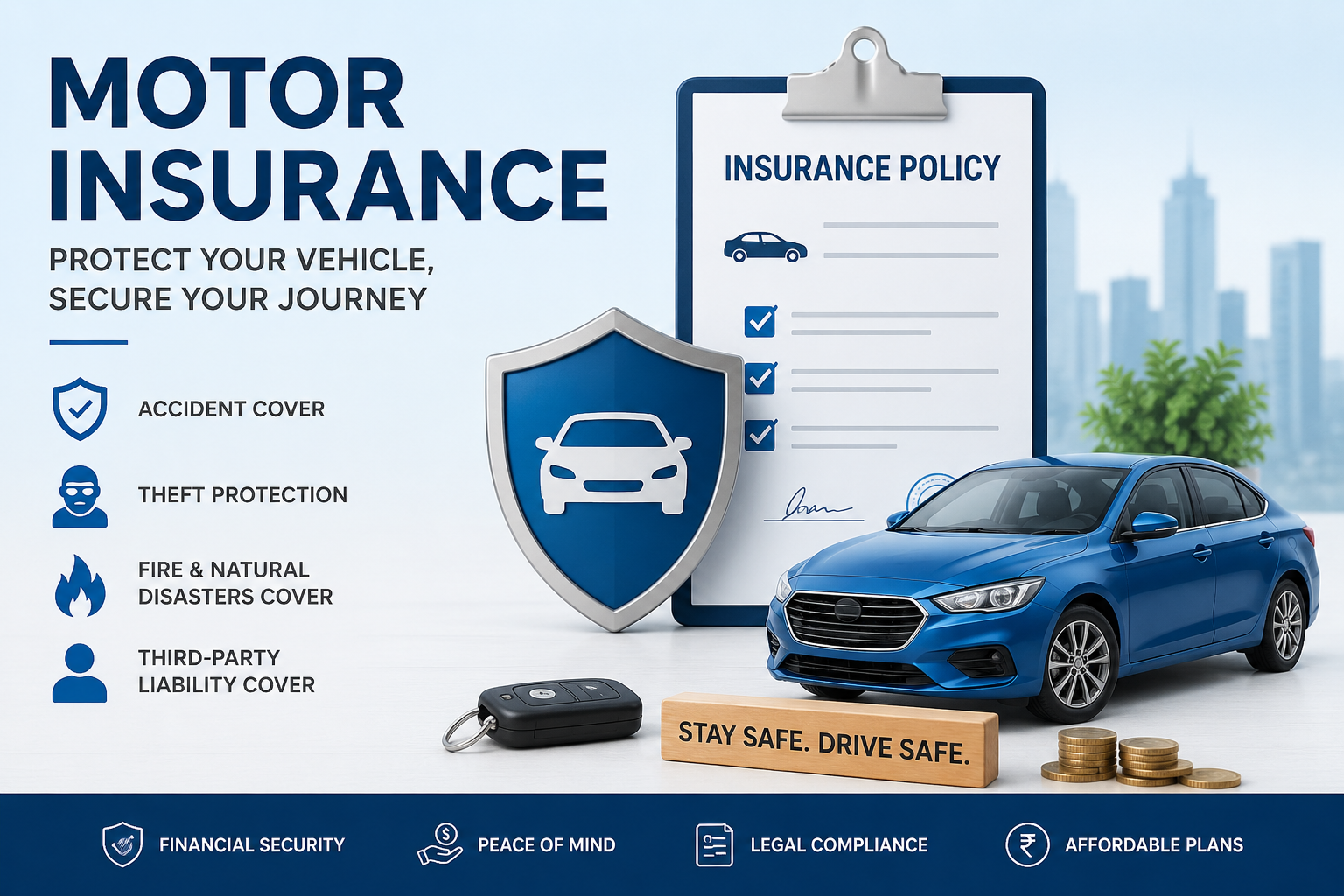
Motor insurance is a contract between you and an insurance company that protects you financially against losses from your vehicle — accidents, theft, fire, natural calamities, and legal liability if you injure someone or damage their property while driving. In India, motor insurance isn't optional for most of this cover — at least a basic level is required by law.
Is Motor Insurance Mandatory in India?
Yes — under the Motor Vehicles Act, 1988, every vehicle driven on Indian roads must have at least a valid third-party insurance policy. Driving without it is a punishable offense, attracting fines and even imprisonment on repeat offenses. This is the legal minimum; it protects third parties (other people and their property) but not your own vehicle.
Types of Motor Insurance in India
| Type | What It Covers | Mandatory? |
|---|---|---|
| Third-Party Insurance | Injury/death and property damage caused to others | Yes, by law |
| Comprehensive Insurance | Third-party liability + damage to your own vehicle (accident, theft, fire, natural calamities) | No, but strongly recommended |
| Own Damage (Standalone OD) | Only damage to your own vehicle — bought alongside an existing third-party policy | No |
| Personal Accident Cover | Injury/death of the owner-driver | Mandatory add-on for the owner-driver (₹15L cover) |
Key Terms You'll See on Every Policy
- IDV (Insured Declared Value): The current market value of your vehicle — this is the maximum amount the insurer will pay if your vehicle is stolen or totally damaged.
- No-Claim Bonus (NCB): A discount on your premium (up to 50%) for every claim-free year, that carries forward even if you switch insurers or vehicles.
- Add-ons: Optional extra covers like zero depreciation, engine protection, roadside assistance, and return-to-invoice — available only with comprehensive policies.
What Motor Insurance Does Not Cover
Even a comprehensive policy typically excludes: driving without a valid license, driving under the influence of alcohol/drugs, normal wear and tear, mechanical or electrical breakdown, and any use of the vehicle outside what's declared (e.g., using a private car for commercial purposes).
Common Mistakes to Avoid
1. Buying only the mandatory third-party cover to save money. It leaves your own vehicle completely unprotected — if your car is stolen or totaled, you get nothing.
2. Under-declaring or over-declaring the IDV. A lower IDV cuts your premium slightly but also caps your payout at claim time. Always keep it close to your vehicle's realistic market value.
3. Letting the policy lapse. A lapsed policy means you lose your No-Claim Bonus and may need a fresh inspection to reinstate cover.
4. Not renewing the Personal Accident cover separately if you've switched vehicles or insurers — this add-on doesn't always carry over automatically.
5. Skipping add-ons on a new car. Zero depreciation cover is especially valuable in the first 3-5 years, when depreciation deductions would otherwise shrink your claim payout significantly.
Key Takeaway: Third-party insurance is the legal minimum in India, but it only protects other people — not you or your vehicle. A comprehensive policy costs more but is usually worth it for the added protection, especially in the first few years of owning a vehicle.
Frequently Asked Questions
Is third-party insurance enough for my car?
It meets the legal requirement, but it won't pay a single rupee toward repairing or replacing your own vehicle after an accident, theft, or fire. For most owners, comprehensive cover is worth the extra premium.
What happens if I drive without any motor insurance in India?
You can be fined under the Motor Vehicles Act, and repeat offenses can lead to higher penalties or imprisonment. You'd also have to pay for any damage or injury you cause entirely out of pocket.
What is IDV and why does it matter?
IDV (Insured Declared Value) is your vehicle's current market value, and it sets the maximum payout if your vehicle is stolen or damaged beyond repair. Keeping it accurate ensures you're neither overpaying premium nor underinsured.
Does No-Claim Bonus transfer if I buy a new car?
Yes. NCB is linked to you as the policyholder, not the vehicle, so it carries over to your new car's policy — you just need to inform your new insurer and provide proof of your NCB from the previous policy.
Is Personal Accident cover really mandatory?
Yes, for the owner-driver — a minimum ₹15 lakh Personal Accident cover is mandatory in India, though you can opt out if you already hold an equivalent standalone policy.