
Choosing and Opening the Right Bank Account: A Complete Guide
Banking Writer
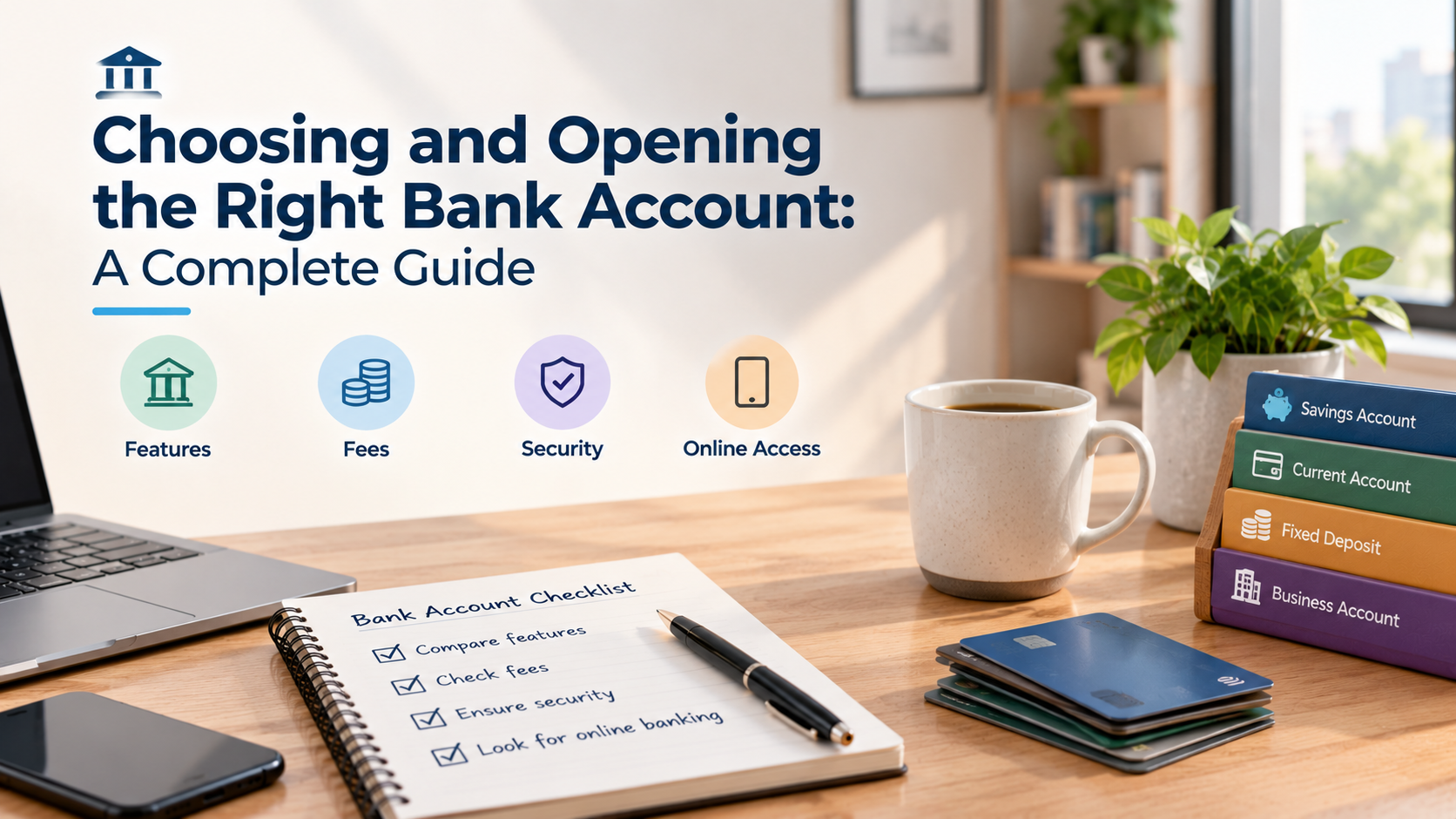
One Account, Many Decisions
Opening a bank account feels like a five-minute formality — walk in, fill a form, get a passbook. But three decisions made in that first sitting quietly shape how much your account costs you and how well it fits your life: which type of account you open, which bank you pick it with, and how carefully you handle the KYC process. Get any one of these wrong, and you end up paying penalty fees, dealing with transaction caps, or stuck redoing paperwork months later. This guide walks through all three.
Savings vs Current: Picking the Right Type
Most people default to a savings account without ever considering the alternative — and for salaried individuals and students, that's usually correct. But the moment you start running a business, freelancing with frequent high-value invoices, or handling transaction volumes your bank quietly caps, a current account removes friction a savings account was never built to handle. The core trade-off: savings accounts pay a small interest (2.5%–4% p.a.) but restrict transaction volume; current accounts pay nothing but remove most of those caps and unlock overdraft facilities.
The full comparison — minimum balance requirements, overdraft access, and exactly who should switch — is in Savings vs Current Account — Which Do You Need?.
Not All Banks (or Branches) Are Equal
Two savings accounts at two different banks can behave completely differently — one might demand a ₹10,000 monthly average balance with steep penalties for falling short, while another has zero minimum balance requirements but weaker digital banking. The right choice depends on how you actually bank: branch-heavy or app-first, high balance or lean, frequent ATM use or rare.
A structured way to compare banks on the factors that actually matter to you is in How to Choose the Right Bank Account.
KYC: Where Most Delays Actually Happen
The single biggest reason account opening drags on for days instead of hours isn't the bank — it's incomplete or mismatched KYC documents. A common trap: your Aadhaar address doesn't match your current residence, and you show up without a secondary address proof to bridge the gap. Another: PAN details with a spelling variation from your Aadhaar, which triggers manual verification instead of instant approval.
The exact document list, common mismatch issues, and how to avoid a rejected application, is covered in Opening a Bank Account — KYC, Documents & What to Watch For.
How the Three Decisions Connect
| Decision | What Gets It Wrong |
|---|---|
| Account Type | Choosing savings for business use — you hit transaction caps and lose overdraft access |
| Bank Selection | Picking based on brand recognition alone, ignoring MAB penalties and digital experience |
| KYC Documentation | Address/name mismatches between Aadhaar and PAN, missing secondary proof |
Key Takeaway: A bank account that "just works" is rarely an accident — it's the result of matching the account type to how you actually use money, picking a bank whose fee structure fits your balance habits, and getting KYC right the first time so you're not stuck mid-process.
Frequently Asked Questions
Can I have both a savings and a current account?
Yes — many freelancers and small business owners keep a personal savings account for household expenses and a separate current account for business cash flow. It also makes tax filing significantly easier.
What happens if I don't maintain the minimum balance?
Banks charge a non-maintenance penalty, usually deducted quarterly without much warning — anywhere from ₹100 to ₹1,000+ depending on the bank and shortfall amount. Always confirm the exact MAB in writing before opening.
Is Aadhaar mandatory to open a bank account?
Aadhaar isn't strictly mandatory, but it's by far the fastest route since it enables instant e-KYC. Without it, you'll need alternate identity and address proof, which typically means manual verification and a longer turnaround.
Can I switch my account type later without closing it?
Most banks allow converting a savings account to a current account (or vice versa) through a request form rather than closing and reopening — though it may require updated KYC and business proof for a savings-to-current switch.