
Debt Consolidation vs. Debt Settlement: What's the Difference?
Finzony Editorial Team
Finzony Desk
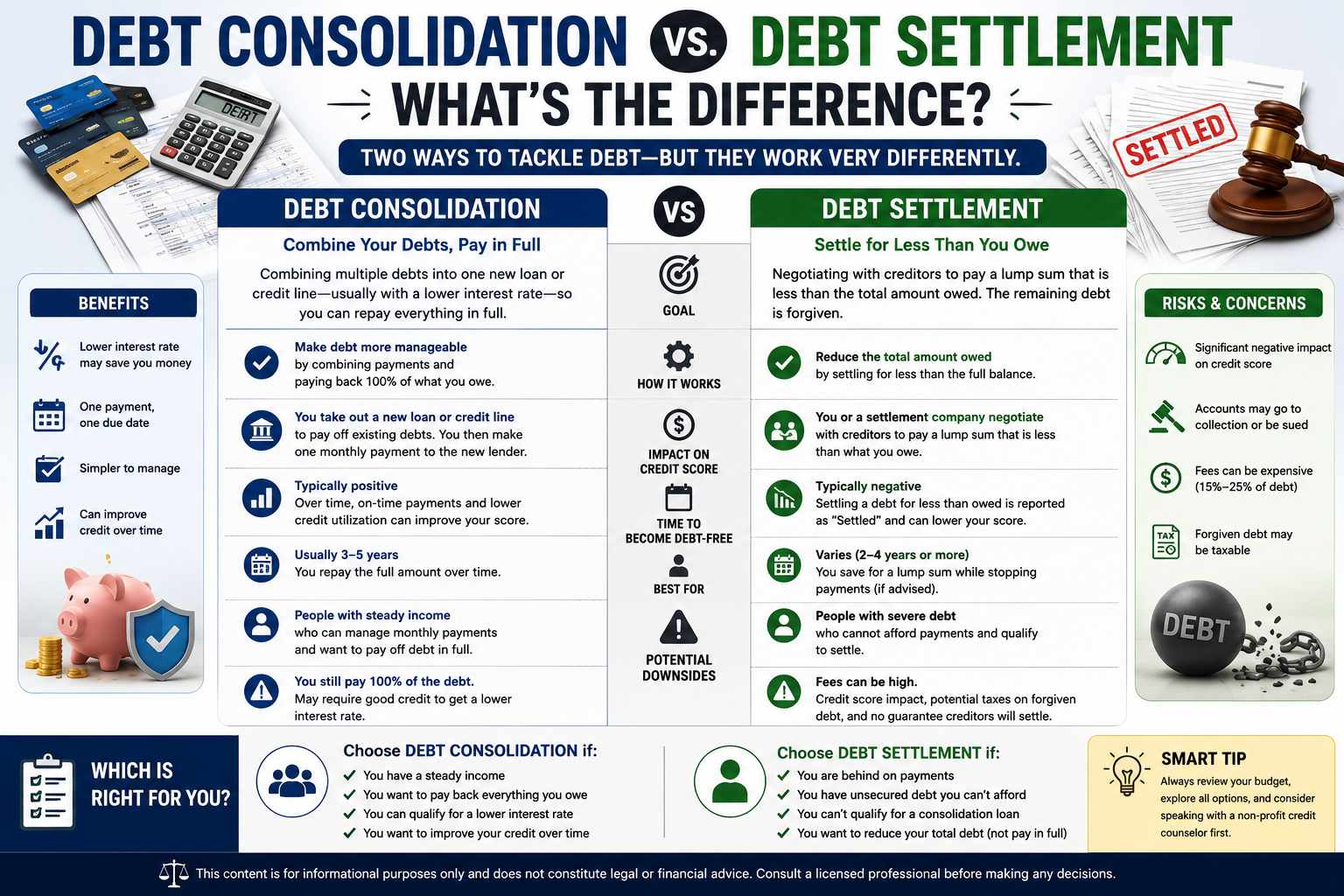
Both promise a way out of overwhelming debt, but debt consolidation and debt settlement work in almost opposite ways — and one of them can seriously damage your credit. Here's how to tell them apart before you commit to either.
Two Strategies, Often Confused
When credit card balances start piling up, "debt consolidation" and "debt settlement" both get pitched as the solution — sometimes by the very same companies. But they are fundamentally different approaches, with very different consequences for your credit score and your wallet.
Debt Consolidation: Combine, Then Pay in Full
Debt consolidation means taking out a new loan (or opening a balance-transfer credit card) to pay off several existing debts, leaving you with a single monthly payment — ideally at a lower interest rate. The key point: you're still paying back 100% of what you owe. You're just restructuring how you pay it.
- Personal loan consolidation: A fixed-rate installment loan pays off your credit cards; you repay the loan over 2–5 years.
- Balance transfer card: Move high-interest balances to a card with a 0% introductory APR, typically for 12–21 months.
- Home equity loan/HELOC: Uses your home as collateral for a lower rate — but puts your house at risk if you fall behind.
Debt Settlement: Negotiate to Pay Less
Debt settlement means negotiating with creditors to accept less than the full amount owed, usually because you (or a settlement company acting for you) have stopped making payments and built up a lump sum to offer as a "settlement." It can genuinely reduce the total dollar amount you owe — but the path there is rougher than most ads suggest.
Side-by-Side Comparison
| Debt Consolidation | Debt Settlement | |
|---|---|---|
| Do you pay the full balance? | Yes, in full | No, a negotiated reduced amount |
| Effect on credit score | Minor dip, recovers as payments continue | Significant drop; missed payments are reported first |
| Typical timeline | 2–5 years of fixed payments | 2–4 years, often unpredictable |
| Tax implications | None | Forgiven debt over $600 is usually reported as taxable income (Form 1099-C) |
| Risk | Low, if the new rate is genuinely better | High — creditors can still sue during the negotiation period |
Debt settlement companies typically ask you to stop paying your creditors and instead deposit money into a dedicated account until it's large enough to offer as a settlement. During that gap, late payments and collections calls are common — and there's no guarantee every creditor will agree to settle.
Which One Actually Fits Your Situation?
Debt consolidation makes the most sense if your credit score still qualifies you for a meaningfully lower rate than what you're currently paying, and your income can support a fixed monthly payment. It's the lower-risk, more predictable path.
Debt settlement is usually considered only when you're already falling behind, can't qualify for a low-rate consolidation loan, and are weighing it against bankruptcy. It should be a near-last resort, not a first move — the credit damage and tax bill on forgiven debt catch a lot of people off guard.
A Third Option Worth Mentioning
Nonprofit credit counseling agencies (look for ones accredited by the NFCC) can set up a Debt Management Plan — negotiating lower interest rates with creditors while you still pay the full balance, with credit impact that's typically much gentler than settlement.
Frequently Asked Questions
Will debt consolidation hurt my credit score?
There's usually a small, temporary dip from the credit inquiry and new account, but scores tend to recover — and often improve — as you make consistent on-time payments and your credit utilization drops.
Is forgiven debt from a settlement really taxable?
In most cases, yes. The IRS generally treats forgiven debt over $600 as taxable income, reported to you on Form 1099-C. It's worth budgeting for this in advance.
Can creditors still sue me while I'm in a debt settlement program?
Yes. Stopping payments to save up for a settlement doesn't legally protect you from a lawsuit, and some creditors do pursue one before agreeing to settle.
Building a full payoff plan, not just picking a strategy? Our free Debt Payoff Strategies course in the Finzony Academy walks through snowball vs. avalanche, budgeting for debt freedom, and more.