
Old vs New Tax Regime: Which One Actually Saves You More?
Tax Planning Writer
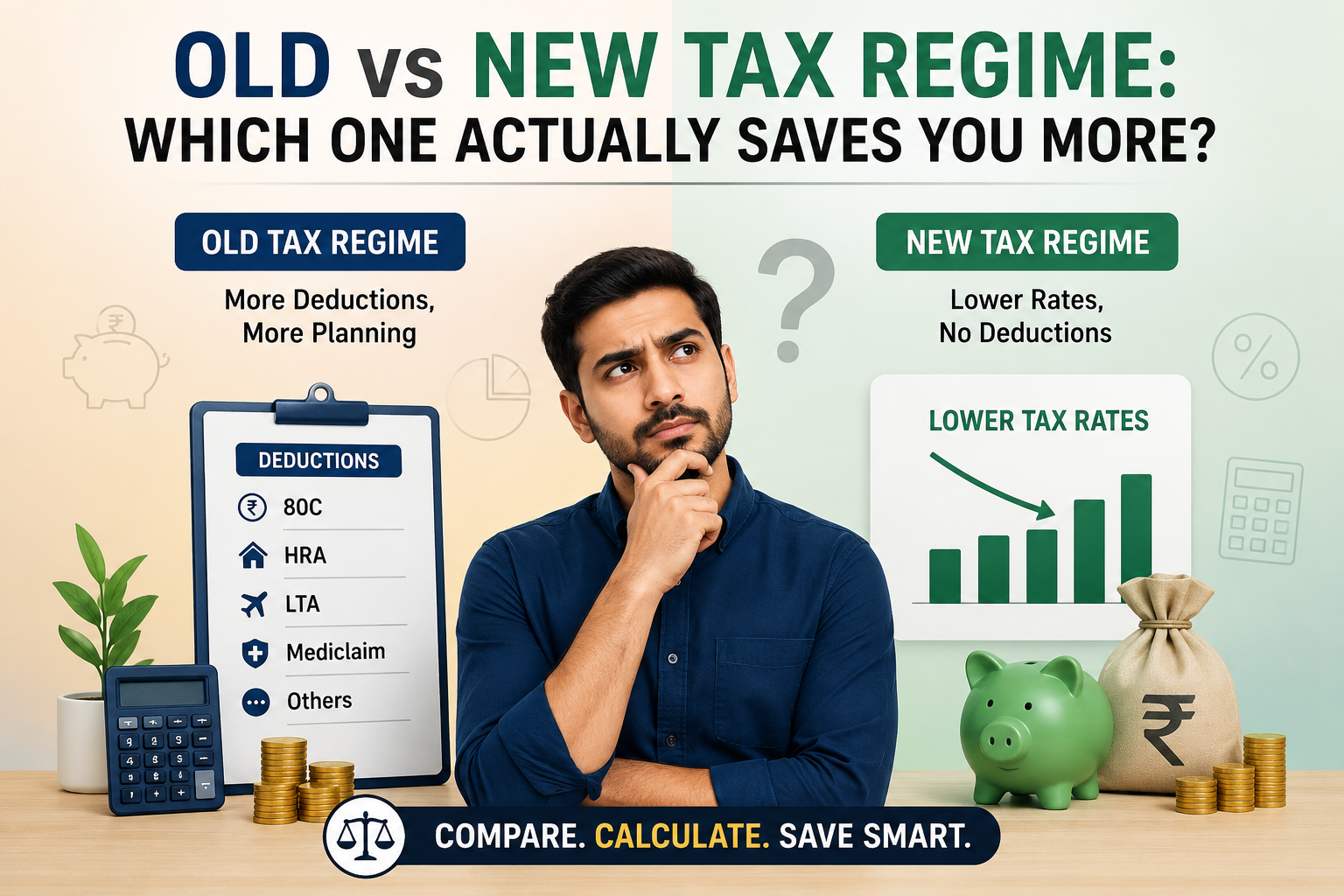
Every year around tax-filing season, the same question comes up: old regime or new regime? The government has made the new regime the default option, but that doesn't automatically make it the better one for you. The real answer depends almost entirely on how many deductions you actually claim — not on which one sounds simpler.
The core difference
The old tax regime has higher slab rates, but lets you reduce your taxable income through a long list of deductions and exemptions — 80C investments, HRA, home loan interest, and more. The new tax regime has lower slab rates, but strips out almost all of those deductions in exchange for the simpler, lower-rate structure.
In short: old regime rewards you for actively investing and claiming deductions. New regime rewards you for keeping things simple, with a lower baseline rate either way.
What you give up under the new regime
This is the part that trips people up. Under the new regime, you typically lose access to some of the most commonly used deductions, including:
- Section 80C (ELSS, PPF, life insurance premiums, principal repayment on home loans, and more)
- HRA exemption
- Home loan interest deduction under Section 24(b) for a self-occupied property
- Most Chapter VI-A deductions (80D health insurance, 80E education loan interest, and others)
A small standard deduction is still available under the new regime, but for anyone who has historically claimed a large chunk of 80C plus HRA plus home loan interest, the new regime's lower rates may not make up for what's lost.
A simplified comparison
| Old Regime | New Regime | |
|---|---|---|
| Tax rates | Higher | Lower |
| 80C, 80D, HRA, home loan interest | Available | Mostly not available |
| Filing complexity | Higher (need proofs, planning) | Lower |
| Best suited for | Those with significant 80C/HRA/home loan claims | Those with few deductions or a simpler income profile |
How to actually decide
The honest way to answer this isn't to pick based on which sounds better — it's to calculate your tax liability both ways using your actual numbers. Add up everything you'd genuinely claim under the old regime (not just what's theoretically available, but what you actually invest and pay toward), calculate your tax both ways, and compare.
If your total eligible deductions (80C, HRA, home loan interest, 80D, and others combined) comfortably cross a few lakh rupees a year, the old regime often works out cheaper despite the higher rates. If your deductions are minimal — say you don't have a home loan and don't max out 80C — the new regime's lower rates usually win.
You're not locked in forever
Salaried individuals can typically choose between the two regimes each financial year when filing returns (subject to current rules at the time of filing), which means this isn't a one-time, irreversible decision. It's worth re-running the comparison each year, especially if your investments, home loan status, or income changes.
Don't guess — calculate
Because the right answer depends entirely on your specific deductions and income, guessing based on general advice can cost you real money either way. Run both scenarios with your actual numbers before deciding.
→ Start the Tax Planning course for the full breakdown of deductions, exemptions, and how income tax slabs actually work — or use our Income Tax Calculator to compare both regimes with your real numbers in a couple of minutes.