
Comprehensive vs Third-Party Motor Insurance: What's Actually Mandatory in India?
Insurance Writer
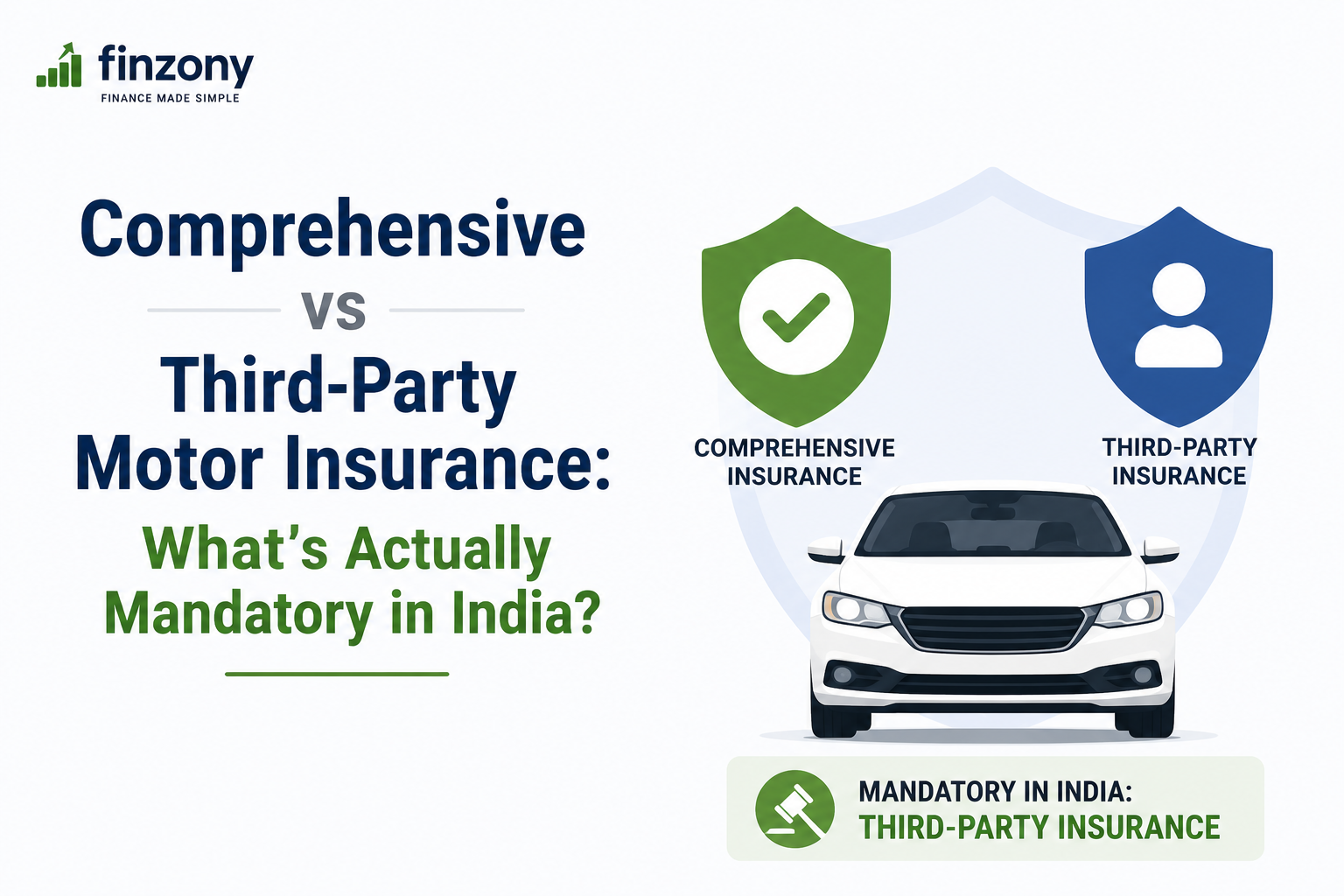
If you own a vehicle in India, you're legally required to have insurance — that part isn't optional. What's less clear to most people is which type, and whether the mandatory minimum is actually enough to protect you.
What's Legally Mandatory: Third-Party Insurance
Under the Motor Vehicles Act, every vehicle on Indian roads must carry at least third-party insurance. This covers damage or injury you cause to other people — their vehicle, their property, or their person. Driving without it is a punishable offence, with fines and even license suspension on repeat violations.
What third-party insurance does not cover: damage to your own vehicle. If you're in an accident and your car needs repairs, third-party insurance pays nothing toward that — it only covers the other party's losses.
What Comprehensive Insurance Adds
Comprehensive insurance includes everything third-party covers, plus protection for your own vehicle — accidental damage, theft, fire, and natural disasters like floods or storms. Most comprehensive policies also let you add riders like zero depreciation cover, engine protection, and roadside assistance.
It costs more than third-party-only cover, but for most vehicle owners, the gap in protection is significant enough that the extra premium is worth it — especially for a newer or more valuable vehicle.
Side-by-Side
| Factor | Third-Party Only | Comprehensive |
|---|---|---|
| Legally mandatory | Yes | No (but recommended) |
| Covers other party's damage | Yes | Yes |
| Covers your own vehicle | No | Yes |
| Covers theft/fire/natural disasters | No | Yes |
| Premium | Lower | Higher |
So Which One Should You Choose?
If your vehicle is old, low in value, or you're purely optimizing for the lowest legal cost, third-party-only might make financial sense. For anything newer, financed, or of meaningful value to you, comprehensive cover is generally the safer call — an uninsured repair bill or a stolen vehicle can cost far more than the premium difference over several years.
Loan-financed vehicles usually require comprehensive cover anyway, since lenders want their collateral protected.
Compare Your Options
Explore motor insurance plans and compare coverage, add-ons, and pricing on Finzony's insurance section before you renew or buy your next policy.
This article is for educational purposes only and does not constitute financial advice. Coverage terms and mandatory requirements can vary — always confirm current regulations and policy details with your insurer.